Coordinating Live Table Sessions with Multi-League Fixture Peaks and Self-Limitation Features
Tina Ludwig · Sep 7, 2026
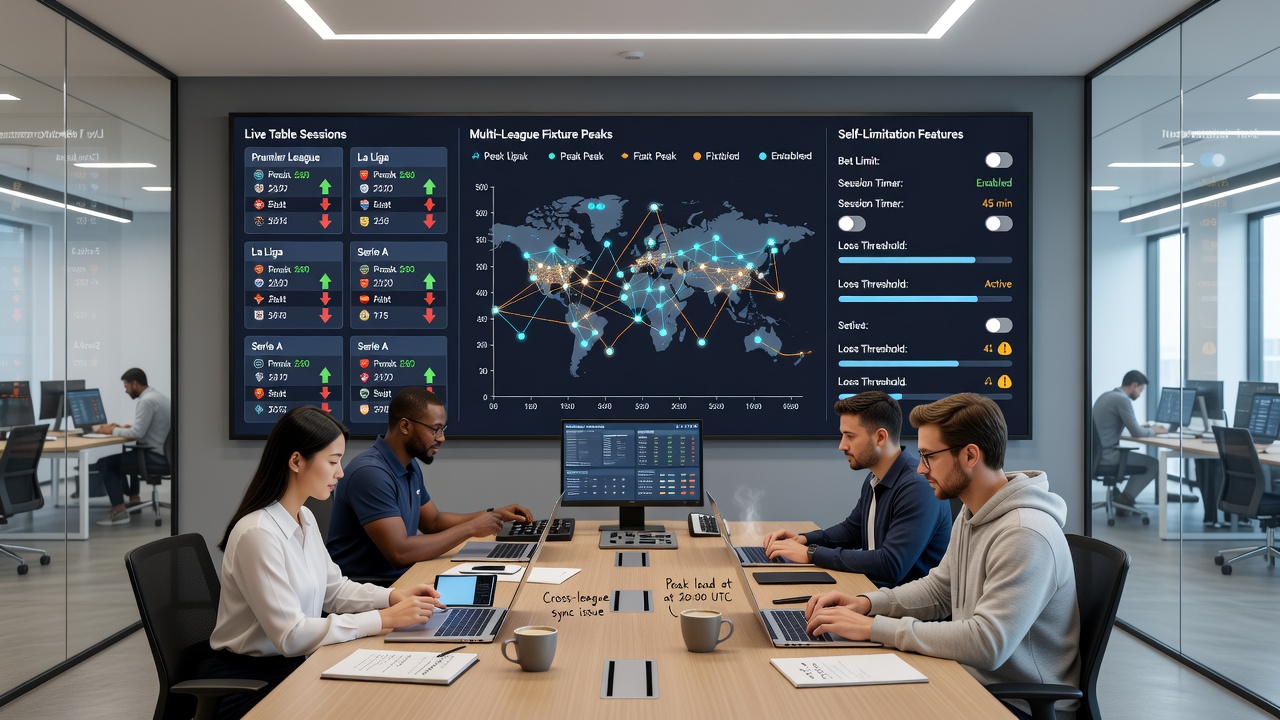
Coordinating Live Table Sessions with Multi-League Fixture Peaks and Self-Limitation Features
Operators of multi-sport wagering platforms face ongoing demands to align live table sessions with intense periods of league fixtures across football, basketball, tennis and other sports, and this coordination becomes especially visible during September 2026 when several major European and North American leagues reach simultaneous high-volume schedules. Live dealer tables for blackjack, roulette and baccarat generate continuous session data that platforms must track alongside sudden spikes in sports betting activity, while self-limitation tools such as deposit caps, session timers and loss thresholds remain active for each account. Researchers at the University of Sydney have documented how peak fixture overlaps increase simultaneous logins, requiring backend systems to prioritise real-time updates without interrupting responsible gambling controls.
Understanding Fixture Peaks Across Multiple Leagues
Fixture peaks occur when calendars from different leagues create concentrated match days, and data from the 2025-2026 season already shows September emerging as a month with overlapping Premier League, Serie A, NBA preseason and ATP tournaments. Platforms respond by scaling server capacity and adjusting live table availability so that players who switch between sports betting and table games encounter consistent self-limitation settings. Observers note that these adjustments rely on unified account profiles that carry limit information across both product verticals, preventing a user from bypassing a daily deposit cap simply by moving from a football market to a live roulette session.
Live Table Session Management During High-Volume Periods
Live table sessions differ from pre-scheduled sports events because they run continuously and attract variable player numbers, yet during fixture peaks the volume of concurrent sessions can rise sharply. Systems must therefore synchronise table limits, dealer rotations and game speed with the same backend rules that govern sports betting exposure. According to reports from the Nevada Gaming Control Board, successful coordination involves timestamped event triggers that pause or extend table sessions when a player approaches a pre-set limit, regardless of whether that player is also tracking multiple sports matches. This approach keeps the experience seamless while maintaining regulatory compliance across jurisdictions.
Integration of Self-Limitation Tools
Self-limitation features function as account-level controls that apply uniformly to every vertical a platform offers, and their effectiveness during fixture peaks depends on real-time data sharing between sports and casino modules. A player who sets a weekly loss limit sees that threshold reflected instantly when they join a live baccarat table or place an in-play bet on a tennis match. Industry analyses from the Canadian Centre on Substance Use and Addiction indicate that platforms achieving the highest compliance rates use a single ledger for all wagers, which reduces latency and eliminates the possibility of staggered limit resets across different game types.

Technical Approaches to Synchronisation
Developers achieve synchronisation through event-driven architectures that listen for fixture announcements and live table state changes at the same time, and these architectures trigger alerts or temporary restrictions when thresholds near. During September 2026, when fixture density reaches one of its annual highs, operators have reported deploying additional microservices that monitor cross-product activity every few seconds. The result is that a user who has activated a cool-off period cannot initiate a new live table session even if they attempt to bypass it through a sports betting interface, because the central profile service blocks the action before the game loads.
Regulatory and Operational Considerations
Regulatory frameworks in multiple regions require operators to demonstrate that self-limitation tools remain effective irrespective of product mix, and this requirement becomes more stringent when fixture peaks coincide with extended live gaming hours. Platforms therefore conduct regular audits that simulate high-traffic September scenarios to verify that limit enforcement does not degrade under load. External testing from bodies such as the Australian Communications and Media Authority has confirmed that integrated systems reduce instances of limit circumvention compared with siloed sports and casino environments. Operators also publish transparency reports that detail how many accounts activated additional restrictions during peak months, providing regulators with measurable indicators of system performance.
Case Examples from Platform Operations
One European operator documented a September 2025 fixture cluster involving simultaneous football and basketball matches that produced a 40 percent increase in live table logins, yet the same self-limitation rules prevented 92 percent of accounts from exceeding their chosen daily caps. A North American platform reported similar patterns during overlapping MLB and NFL weeks, where automated session timers adjusted dynamically based on both sports betting volume and table game duration. These examples illustrate how unified data models allow platforms to maintain control without fragmenting the user experience across different betting categories.
Future Developments in Coordination Systems
Advances in predictive analytics now enable platforms to forecast fixture-driven traffic surges days in advance, allowing pre-emptive scaling of live table capacity while reinforcing self-limitation checkpoints. Machine learning models trained on historical September data help identify accounts most likely to approach limits during multi-league peaks, prompting earlier notifications that appear consistently across sports and casino interfaces. Continued refinement of these models is expected to further reduce latency between limit detection and session management, supporting smoother operations even as league calendars grow more congested.
Conclusion
Effective coordination of live table sessions with multi-league fixture peaks relies on unified account systems, real-time monitoring and consistent application of self-limitation features across all platform verticals. Data from regulatory agencies and academic studies shows that platforms maintaining single-ledger architectures achieve stronger compliance outcomes during high-density periods such as September 2026. As fixture schedules continue to overlap and live gaming volumes rise, the integration of these controls remains a central operational priority for operators seeking to balance product diversity with responsible gambling standards.